In this Graphic Design and Typography course, I developed my abilities to apply composition, graphic design, and typography as a visual and communicative expression. The class included basic rules and theories in typography, composition, color, and design. I deepened and practiced my abilities to reflect on the relationship between graphic elements and typography in different contexts, the importance of visual communication for the recipient, to critically examine my own and the work of others’ in the class. The class did not only explore practical tasks in graphic design but also written reports and reflections.
Key takeaways
- Understanding principles and rules in compositions and layout.
- Understanding rules in typography and classification of typefaces.
- Understanding rules in gestalt and color theory.
- Performing critique and reflections on graphical designs and typography.
- Production use of Adobe InDesign, Affinity Designer, Affinity Publisher, and Affinity Photo.
Denotation and Connotation
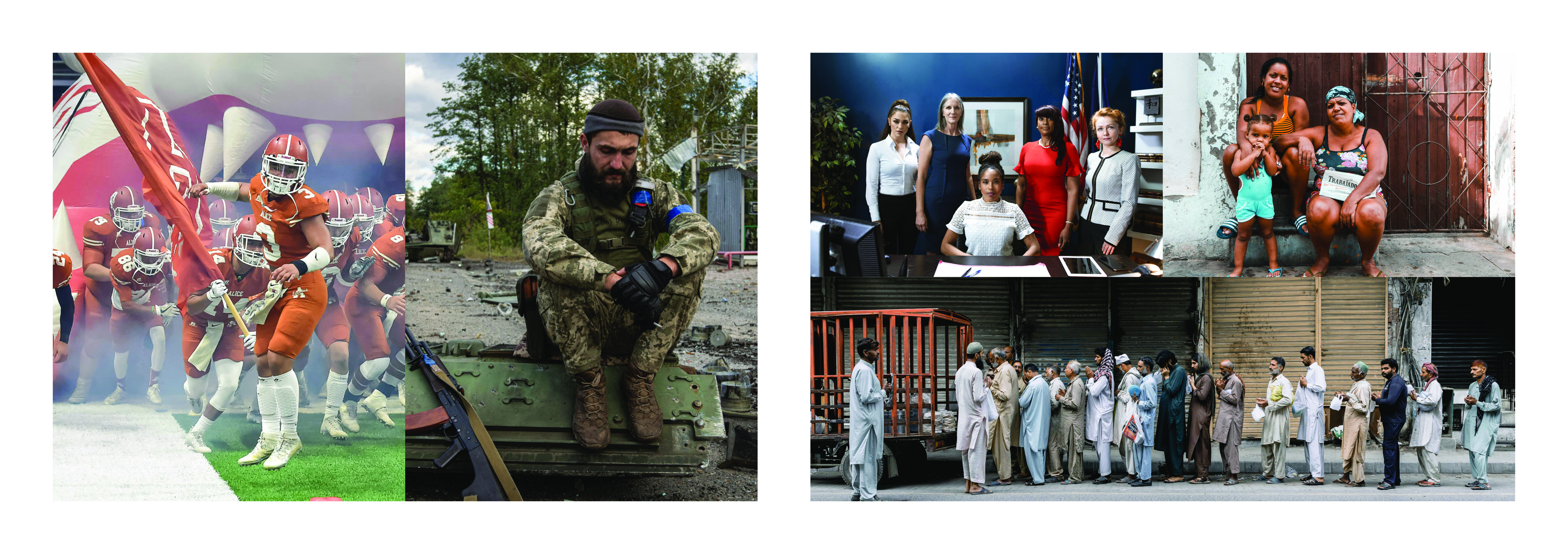
An image selection task practiced finding and composing pictures on a theme ‘I have a dream’.
- US Football: “I have a dream of a play and victory.”
- Ukraine: “I have a dream of peace and freedom.”
- C-level executives: “I have a dream of shareholder value.”
- Generations: “I have a dream of motherhood. Past, present, and future.”
- Refugees: “I have a dream of a meal today”.
Brainstorming
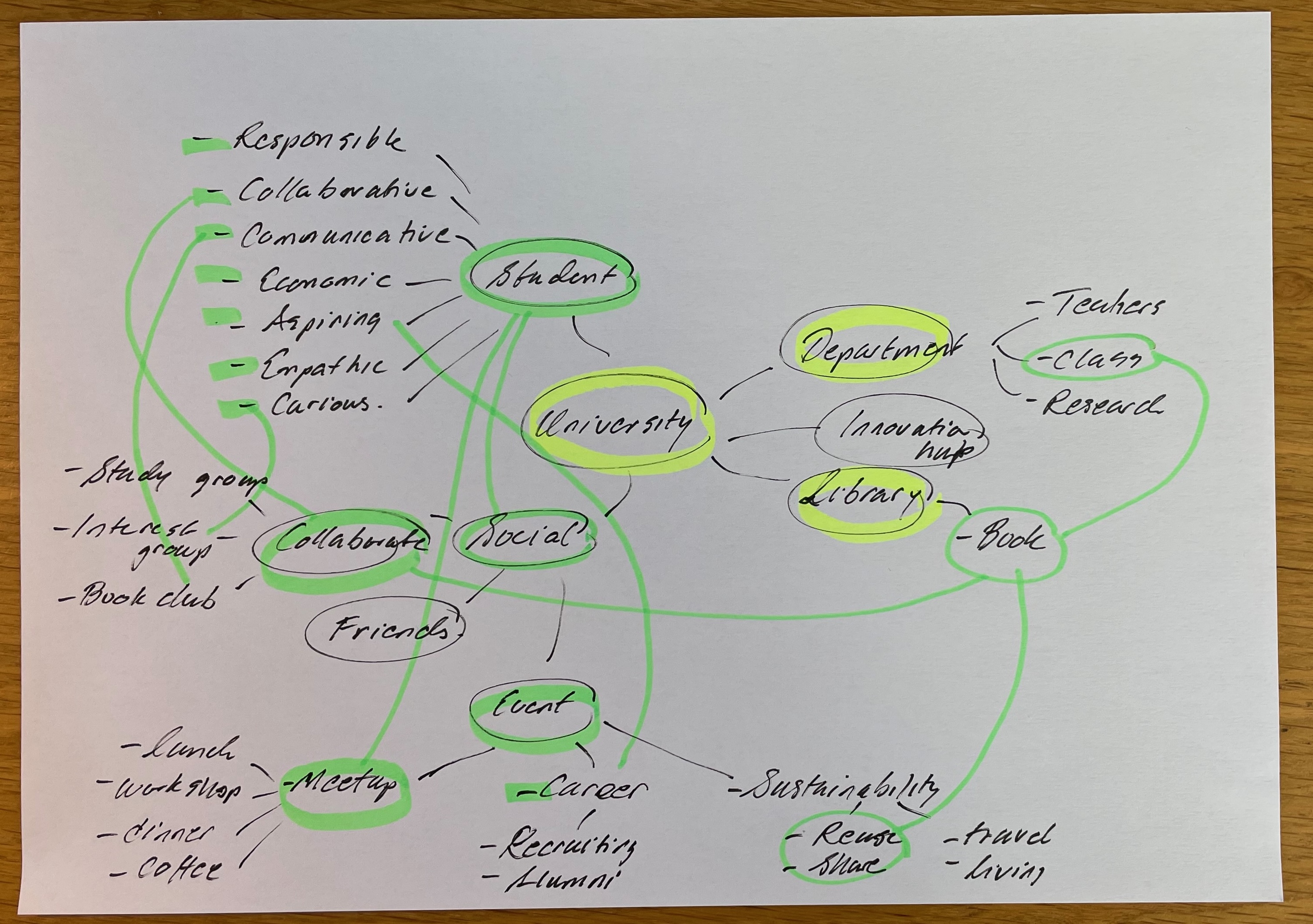
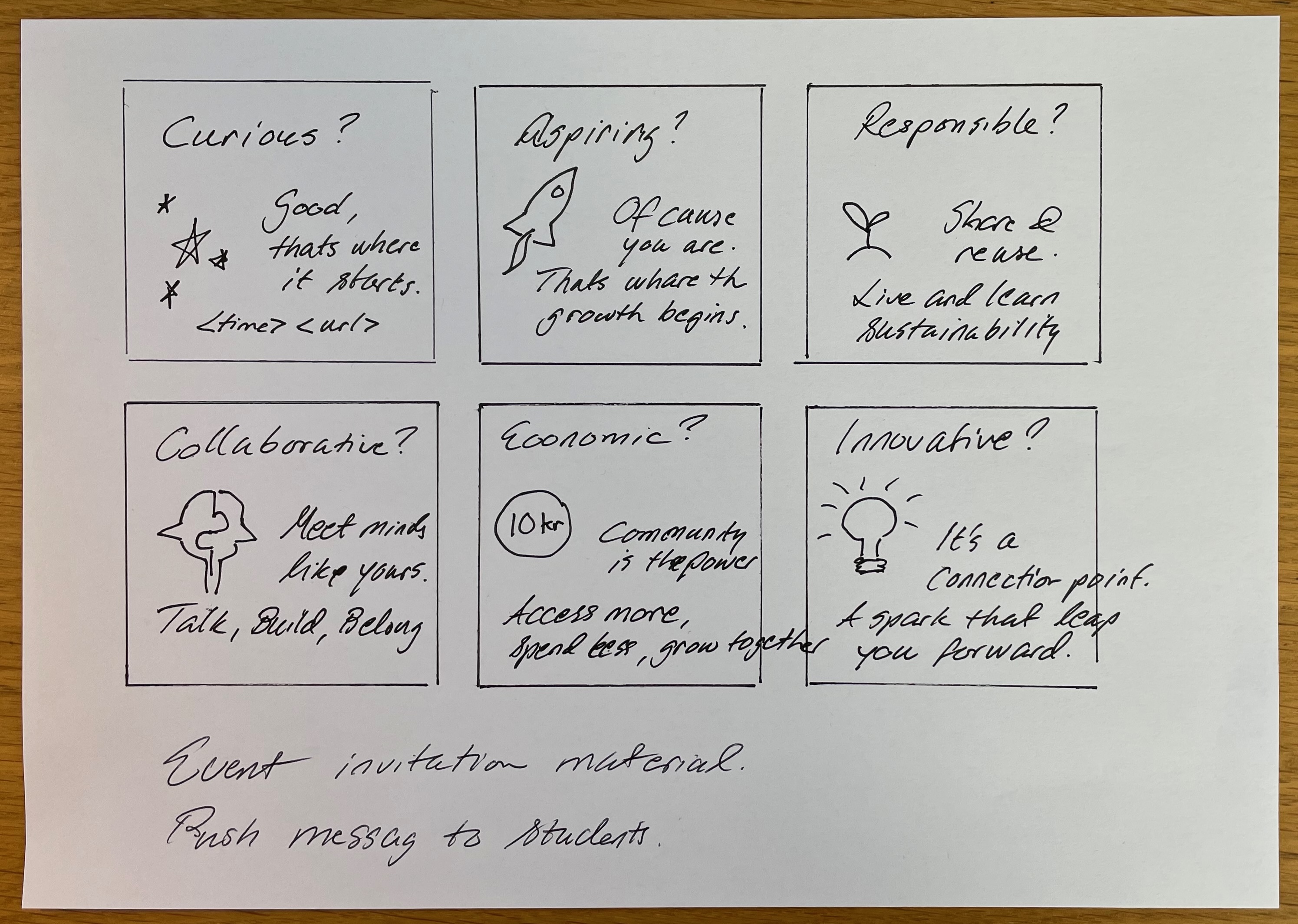
A brainstorming task practiced finding solutions to a “Social when apart” online event for distance students to get to know new people at the university. The task practiced the discovery stages of ideation, sketching, refinement, and reviews.
Page layout
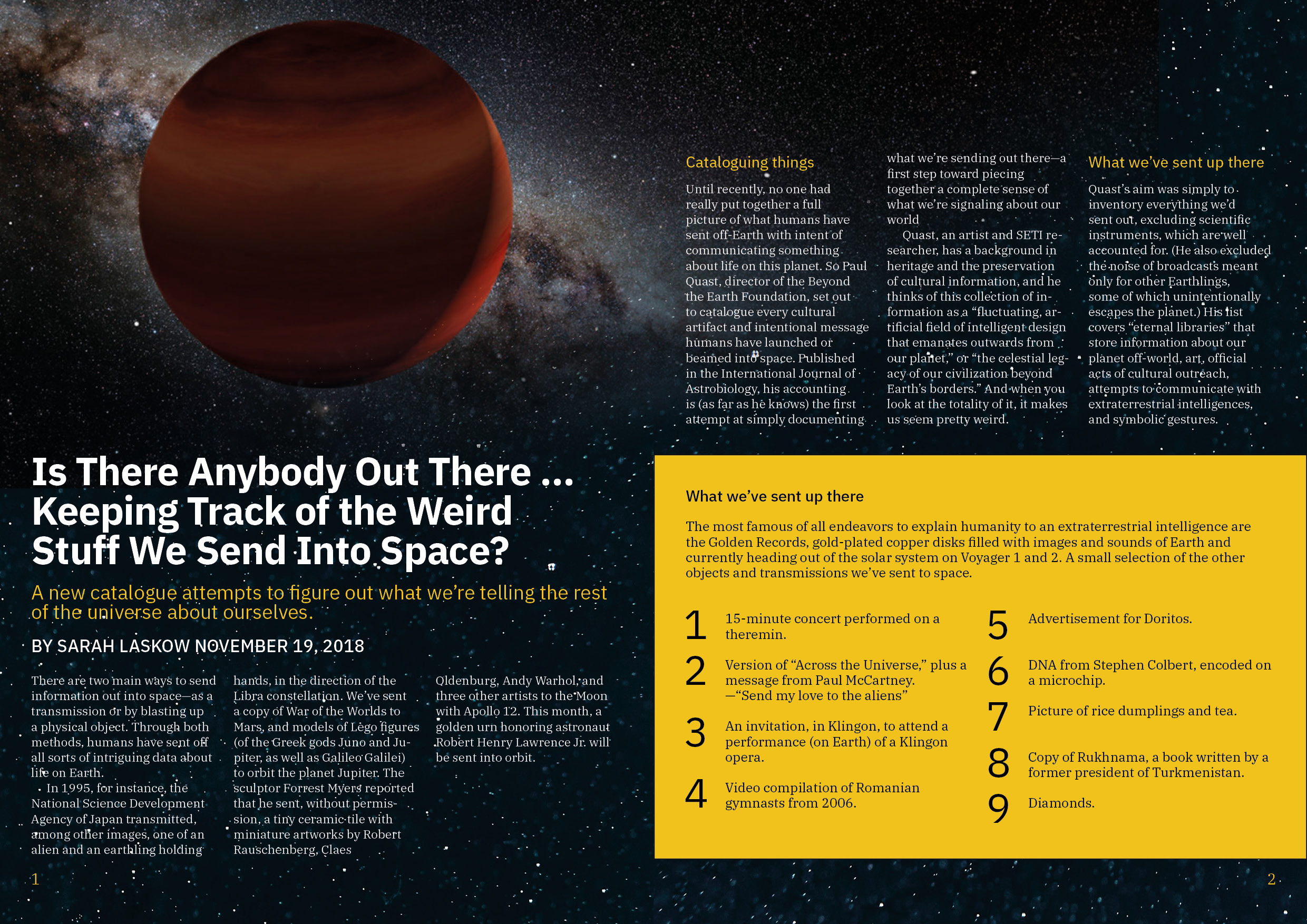
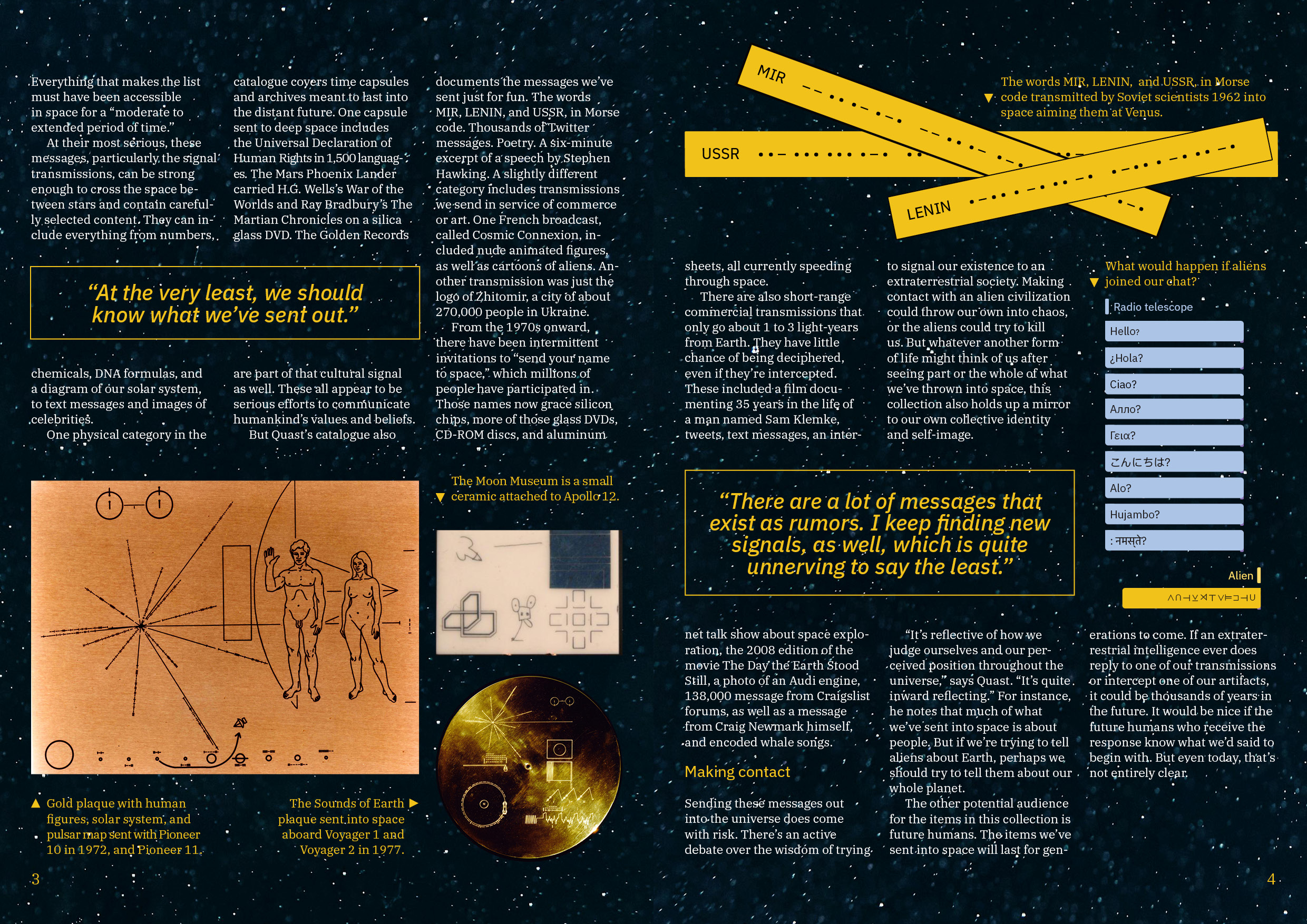
A task in layout practiced the design process to produce a magazine print layout from an article by Sarah Laskow, including the steps of sketching, choosing imagery, creating the design, and analyzing the work.
The layout used a Portrait A4 layout with a 3-column and 4-row grid. The opening spread used a brown dwarf star with an intense galaxy background illustration that catches the eye and creates an interest with the reader. The text is much elaborate on the physical items sent into space, and I want to bring this to the reader as photos. I found photos of the Pioneer 10 and 11 plaques, the Sound of the Earth disc, and the Moon Art chip on Wikipedia. The author also discusses the event of a return message from space. I wanted to create a fun illustration on the topic and took a modern chat-rail design to make that into a conversation between the radio telescope sending out “Hello” in all human languages and a rather weird reply from the alien. I used AI to generate a list of “Hello?” into 100 unique language translations, that then was used in the graphic illustration. The alien language is using mathematical symbols as a text string.
Limitations
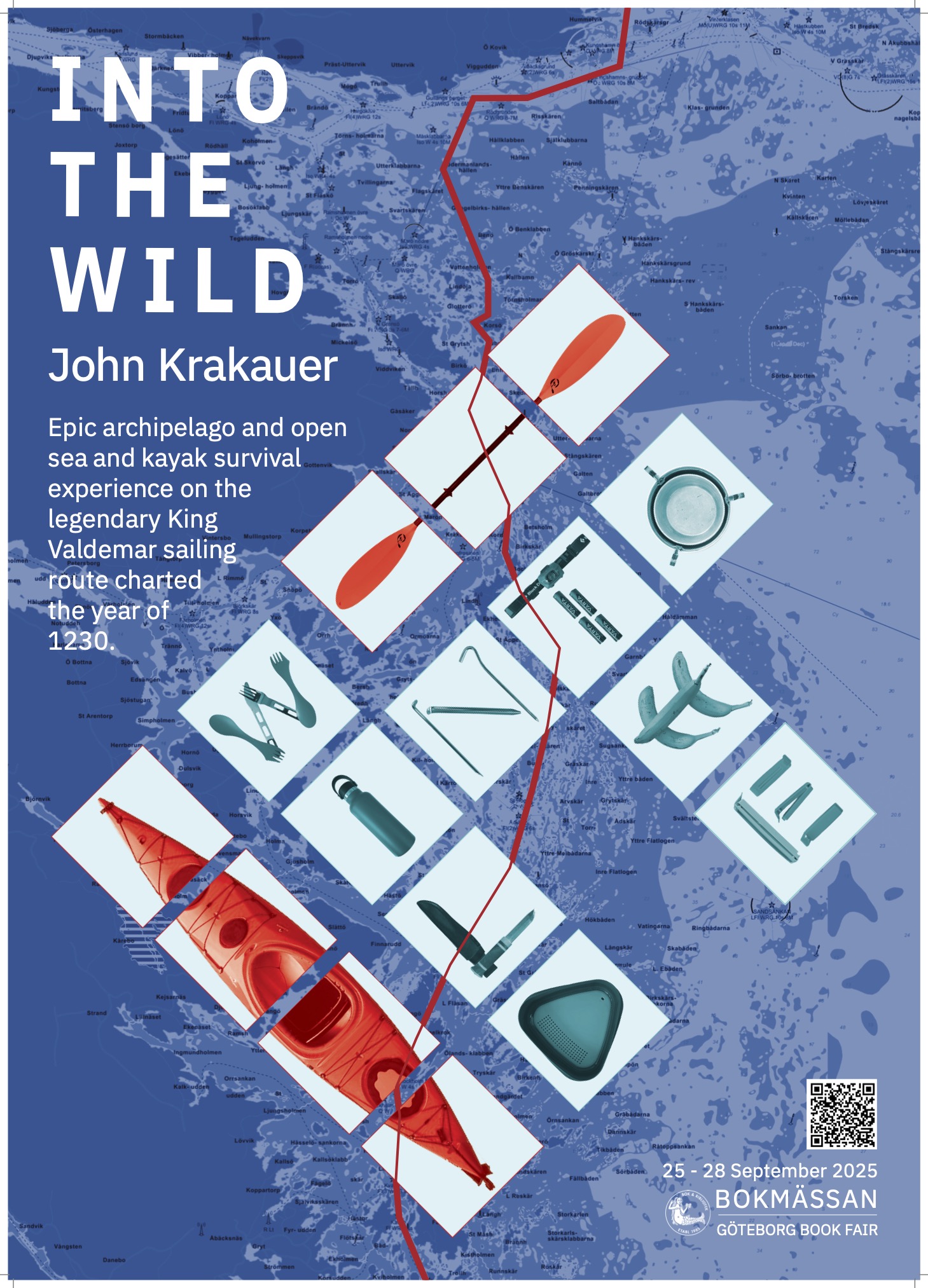
The Limitations task was exploring the communication of the message “Into the Wild”. The design was limited to only using a kit of found objects, assembling these objects into letters, and creating a composition that conveyed the message. Objects may also be used as illustrations, backgrounds, and patterns to enhance the message.
An initial concept composition of objects into the message using keywords associated with Sensation-Seeking: Adventure, Survival, Boredom, Sensations, Existential, Idealism, Identity, Hero, Nature, Freedom, Reliance.
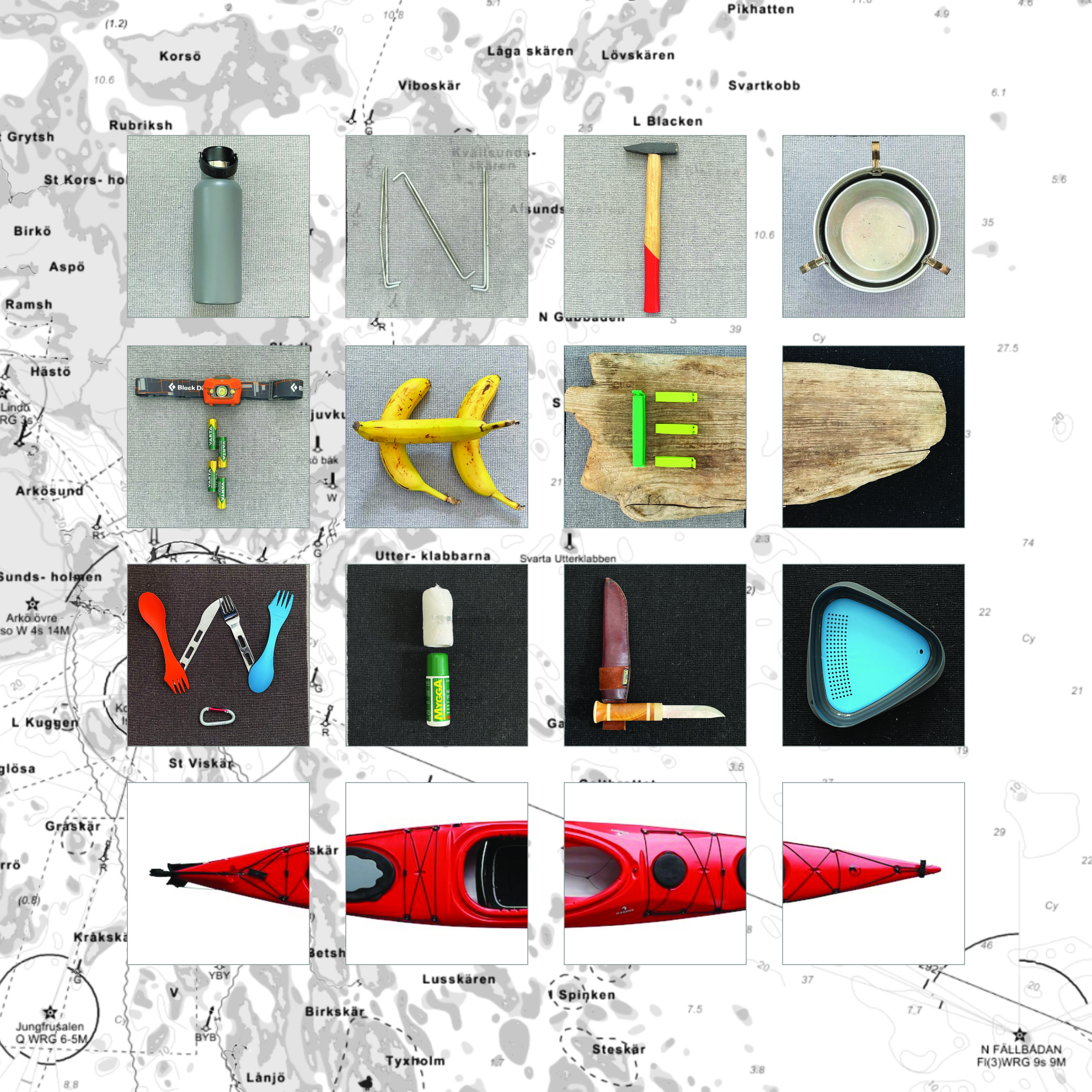
The graphic layout is putting a focus on key design concepts. The objects form a hierarchy using different colors to associate green with letter objects and red with the kayak and route objects. The layout is using lines and planes as base graphics elements, such as the form of squares, borders, line thickness, and color. The elements are also using symmetry and asymmetry with the grid, rotation, and non-centered text alignments. The elements and background are using color contrasts to enhance the object design. Also, the type is using a graphical hierarchy of title, author, and abstract.
Constrasts
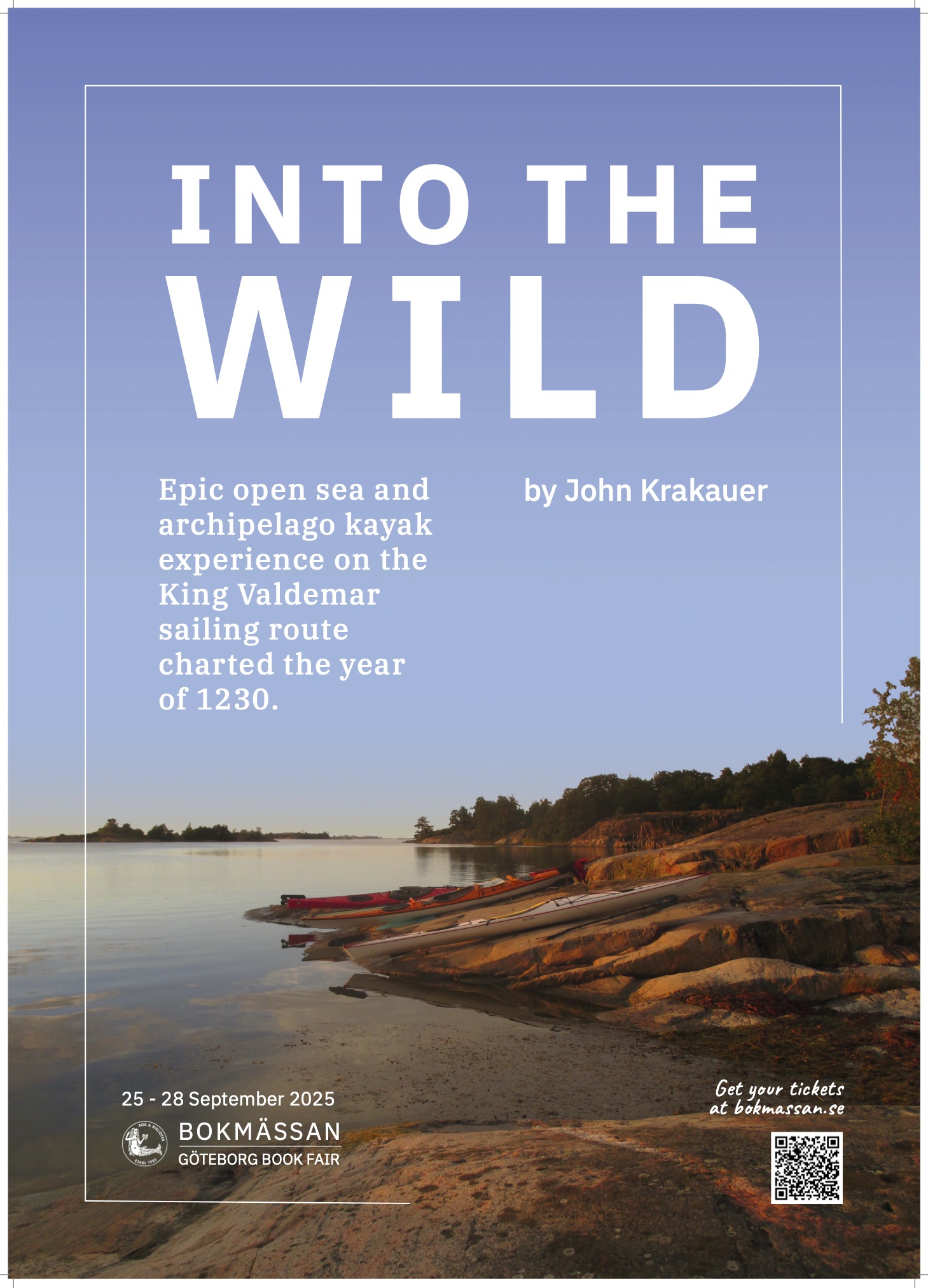
A sequential task explored the design of an entirely different composition, using the contrast keywords: Concrete pictorial. Natural analogous colors and scales. Sans, sans, serif, and script typefaces.
A moodboard was a highly productive tool in identifying themes, colors, and moods. I used similar techniques in UX designs but did not make the connection back to this field of graphic design.
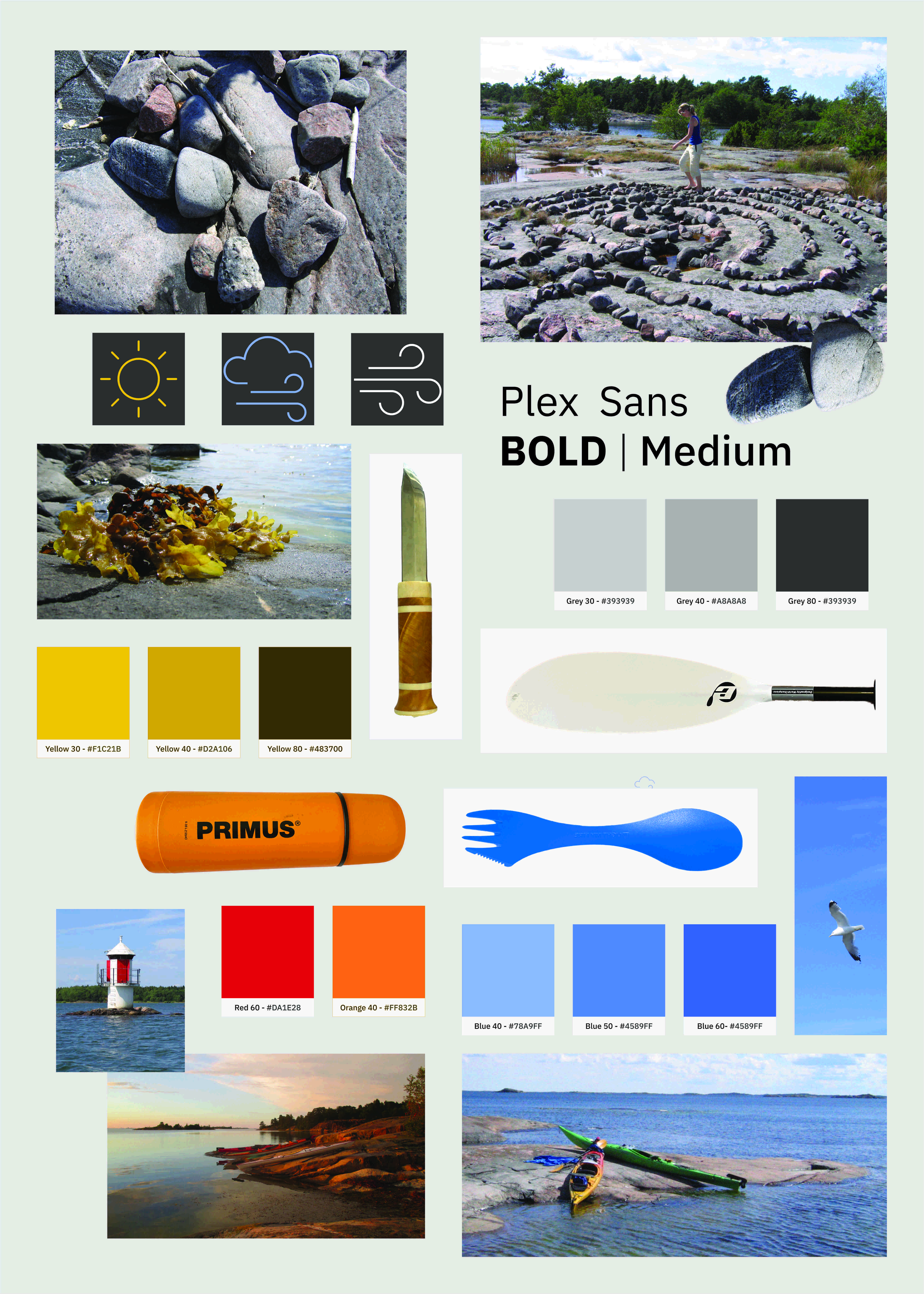
The final graphic layout was further deepening the key design concepts. Using analogous colors with Yellow, Orange, Red as a base color combination. Also limiting color use to 3 shades of Blue and Grey for background. Staying strictly to the recommended typographic design rule of Sans for title, Serif for copy text, and Script for call-outs. Using vivid strong color images to guide the viewer on mood. Calm, Restful, Silent, Open. Using simple shapes for vector illustrations. Planes, Circles. Contrasting the static and abstract illustration designs with natural organic forms.
Ocean Plastics
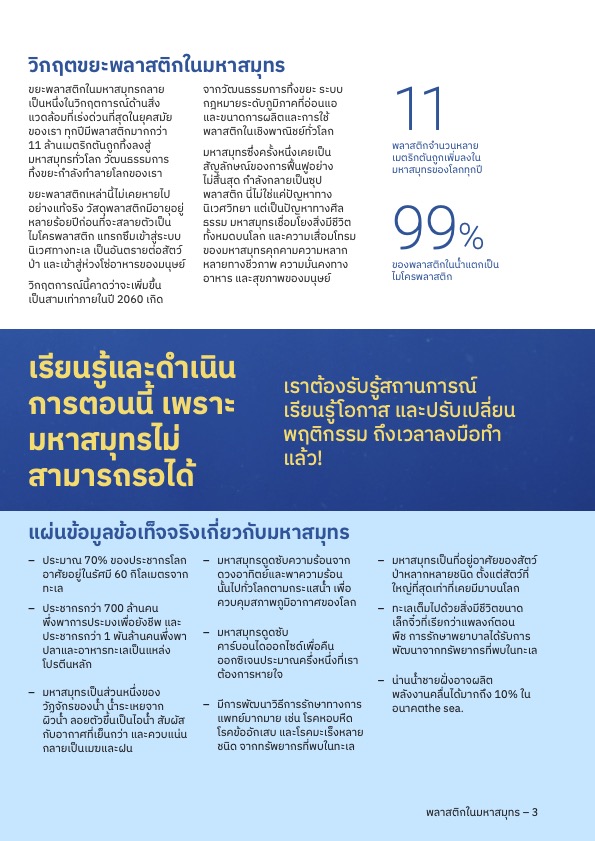
The final graphical design and layout task used all new skills in one design project; research, ideation, sketching, and creating a visual tone, composition, typography, and page layout, using images and color. The task was to create a design on the topic of ocean plastics. ‘Plastics polluting our waters – what can you as a graphic designer do?’.
For this design, I needed to deepen my understanding of ocean plastics, complementing my current insights into the sustainability subject area from university classes and my professional experiences in sustainable enterprise SW design. I focused my research on the following questions required by the design task. Who are the users of the design? What is the problem to be addressed? What is the intended outcome? How can design contribute to this outcome? What are the requirements on the design delivery?
From these questions, a series of more detailed research topics stood out. Understanding of the Ocean Plastic crisis. Understanding the chemistry and industrial use of plastics. Understanding drivers of learning for students. Finding validated statistics and leading quotes that will engage a senior student and influencer. Understanding United Nations social and environmental sustainability programs for plastic resources and the ocean environment. Understanding any graphical and typographical design languages and standards applicable to the task.
During ideation, a set of storyline statements for the project was created. These statements of outcome and intent form the core of the project pitch:
“This fictitious design project has been initiated by UN DESA, post the UN Ocean summit 2025 (UNOC3), to produce senior student material targeting the ocean plastic crisis. The delivery is to be owned and published by UNESCO. The material design is commissioned to a design studio to be delivered by August 10th.”
“The United Nations wants to build senior student cognition of a global ocean plastic crisis, give clear opportunities to reduce the one-time use of plastic products, and through deeper studies build motivation for a personal and community-centric sustainable behavioral change.”
“Senior students can, in less than a day, learn about the ocean plastic crisis, become self-motivated to deepen their environmental awareness, and start changing their plastic consumption patterns while influencing others to join.”
The research provided input to the multi-page structure of the student workbook: The ocean plastic crisis, The great Pacific garbage patch, The chemistry of plastics, The lifecycle of plastics, The UN SDGs, especially goal 12 and 14, Behaviors and actions, Study topics and science projects.
For this student workbook, I needed front- and back-page layouts, a consistent spread layout, guiding designs for image layouts on spreads and pages. Guiding quote, callout, figure text, page numbers, and image gallery layouts. The final decision was to choose:
- A4 portrait format.
- Spread / page layout is using 20mm top / bottom / outside margins, and a 10mm inside margin.
- 3-column symmetric layout.
- Blue monochrome color swatches. Yellow accent color swatches.
- A hierarchy analysis leading to a specification of fonts and scales used in the layout cases.
The final design was performed using Adobe InDesign. Illustrations were created as vector art in Affinity Designer. Photos were edited in Affinity Photo.
The delivery owned and published by UNESCO will be delivered in multiple languages. To test the layout, a localization to Thai was produced.
 lnu.se
Graphic Design and Typography.

Into The Wild poster
Into The Wild contrasts poster
Ocean Plastics student workbook.