Understanding contemporary design requires understanding where it comes from. This course explored the history of graphic design through the evolution of typography, printing, visual styles, and cultural movements. By combining historical studies with practical design exercises, it provided me with a broader perspective on how visual communication has developed over time and how historical ideas continue to influence modern design practices.
Exploring a typeface
The assignment explored the taxonomy and evolution of a single typographic character or sign through visual design. Rather than surveying a complete typefaces, the project focused on a single letter A. The objective was to investigate how the complexity of a character can be expanded or reduced in structure, proportion, contrast, and ornament, influencing both readability and visual expression.
My design concept, A Spring Metamorphosis, presents typography as a continuous transformation inspired by the biological process of metamorphosis. Beginning with the stripped-back geometry of modern sans-serif forms, the composition gradually evolves through italic and serif styles before culminating in richly ornamented script lettering. The progression illustrates how cultural, technological, and aesthetic developments have shaped typographic expression over time. Historical typefaces were carefully selected, adapted, and recomposed into a single visual narrative. The finished poster demonstrates that even subtle changes to fundamental typographic elements can dramatically alter expression while maintaining recognisable form.
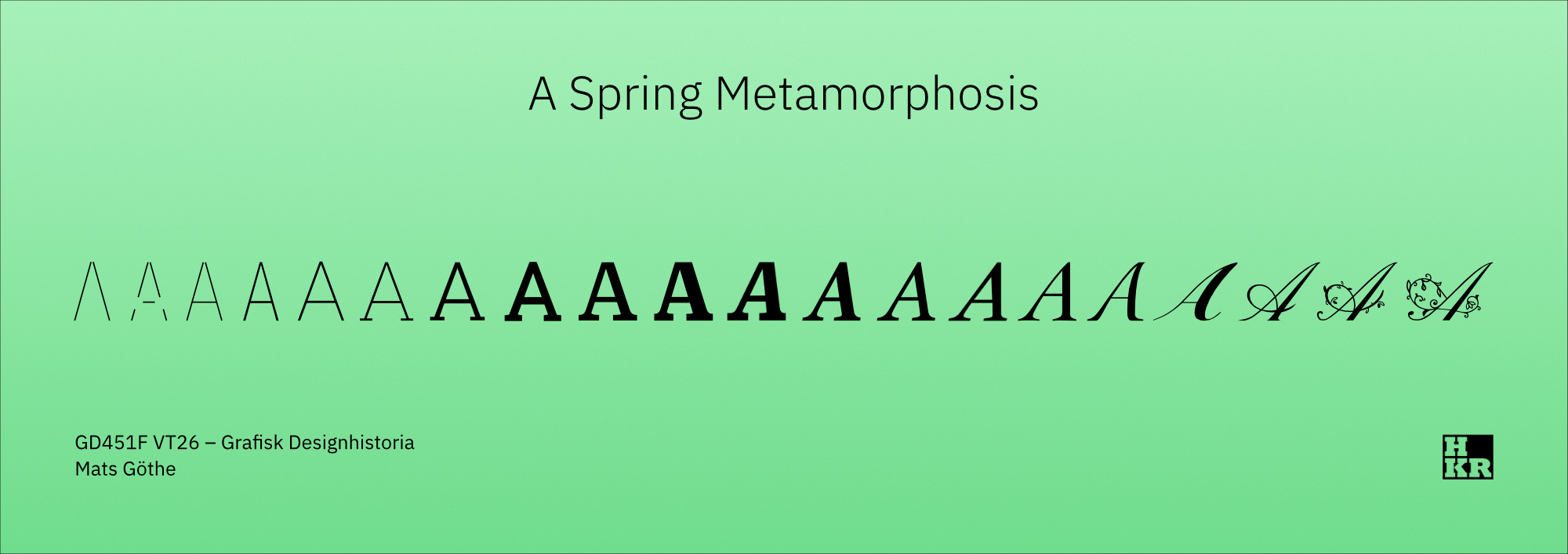
A Spring Metamorphosis poster.
Contemporary paraphrase
The assignment reinterpreted a historical work of graphic art by creating a contemporary paraphrase that preserved the visual language of the original while communicating a new message. I selected The Scream (1895 lithograph) by Edvard Munch and explored how its themes of anxiety and isolation remain relevant in the age of social media.


The Scream lithograph by Edvard Munch and the final paraphrase.

The illustration used in a magazine article layout.
Historical graphical design timeline presentation
The final assignment explored the evolution of graphic design through a historical timeline that connected major design movements into a coherent narrative. Rather than presenting design history as a sequence of isolated styles, the study examined how each movement emerged as a response to changing technological, social, and cultural conditions in Europe during the first half of the 2000-century.
The timeline was structured around a central argument: graphic design has continually shifted between industrial rationalism and cultural complexity. Beginning with the handcrafted ideals of Arts and Crafts, it traces the rise of Bauhaus, Constructivism and Swiss Style, where design became increasingly systematic, functional and optimized for industrial production. The narrative concludes with Postmodernism, which challenged modernist objectivity by reintroducing identity, expression and cultural diversity into visual communication. Historical works, influential designers and original visual analyses has been combined into a consistent editorial layout to communicate both historical context and design principles of the time.
The completed presentation demonstrates that graphic design history is not simply a chronology of visual styles, but an evolving dialogue between technology, society and human expression.
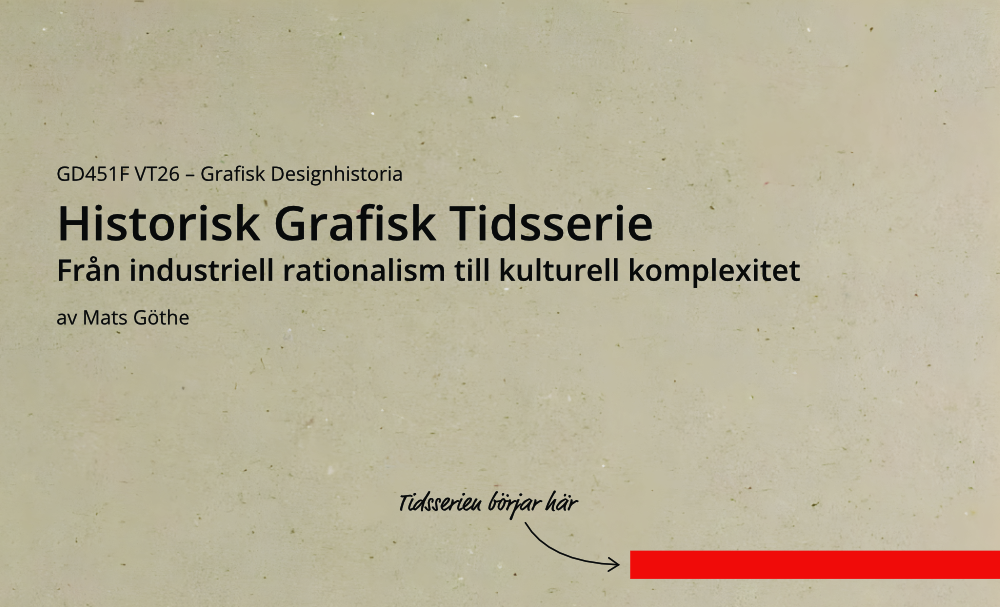
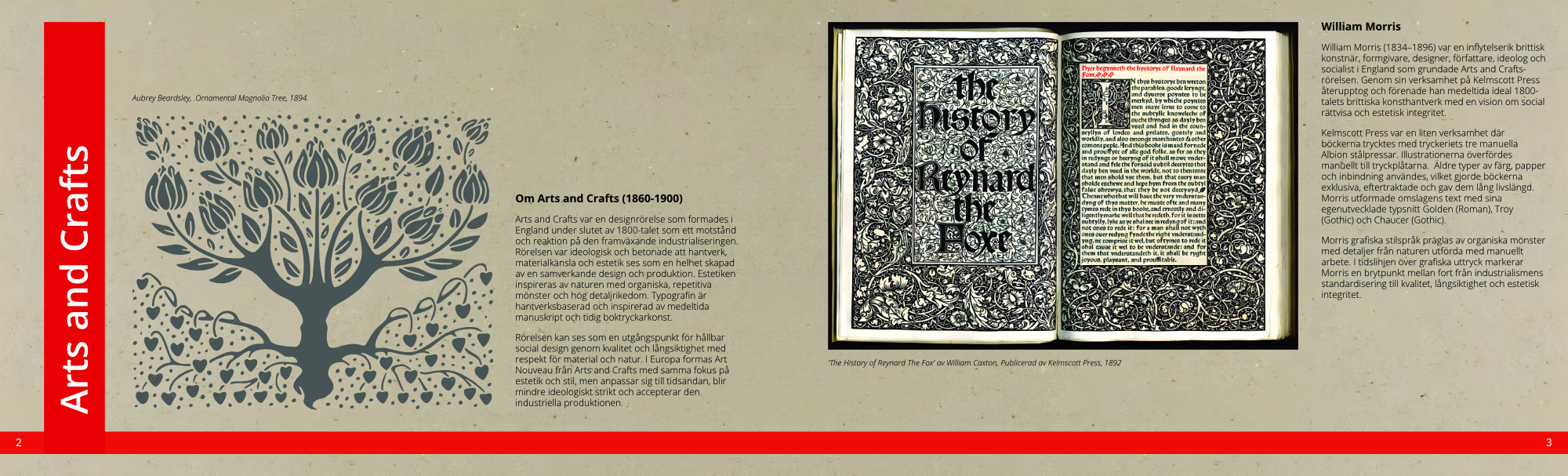
Historical graphical design timeline from early industrialism to postmodernism.
Historical graphical design timeline poster
The final assignment aimed to combine the historical design movements in the timeline into a single contemporary graphic expression. I approached the task as the design of a coherent communication system guided by a clear design brief. The concept centered on a fictional exhibition at Norrköping Art Museum titled From Industrial Rationalism to Cultural Complexity, providing a meaningful context in which historical ideas could be reinterpreted.
Instead of blending styles for their visual appeal, the design identified and combined their underlying graphical principles. Bauhaus contributed functional reduction and geometric typography, Swiss Style established the grid, hierarchy, and structural clarity, while Postmodernism introduced complexity, layered imagery, and cultural expression. Rather than replacing previous ideas, new design movements reinterpret and build upon them, creating new forms of visual communication that remain grounded in design history.
.
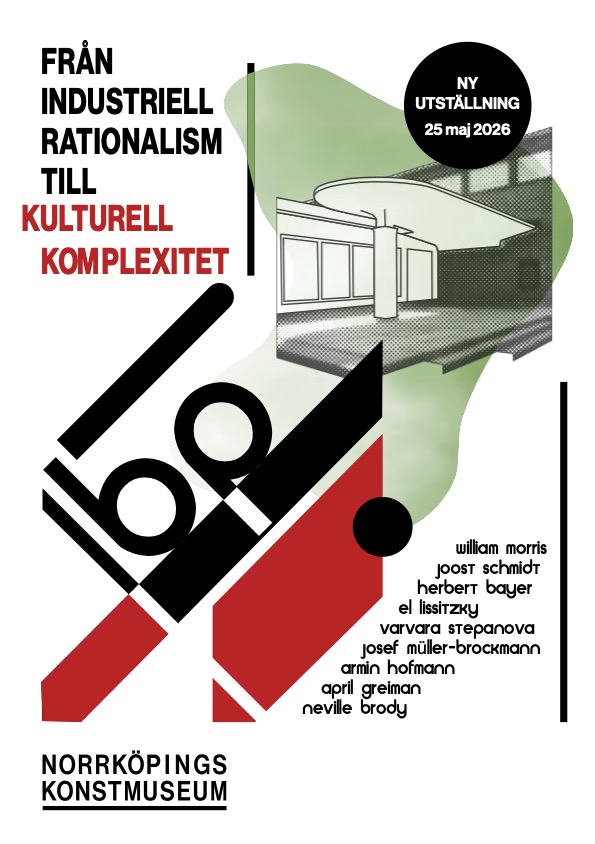
Historical graphical design timeline poster.
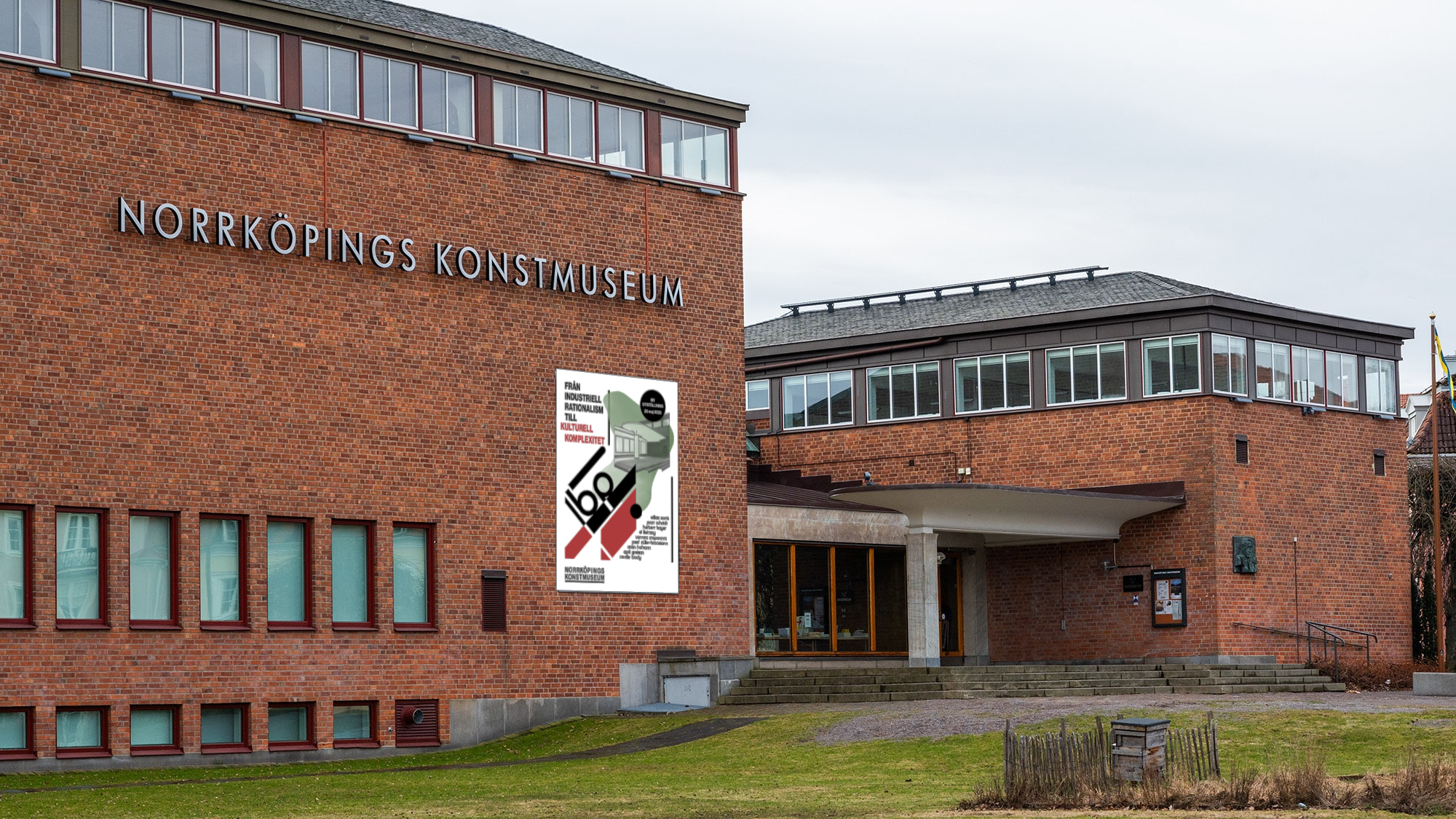
The poster exemplified by presented at the Norrköping Art Museum.
 hkr.se
Graphical Design History.

Exploring a typeface. A Spring Metamorphosis.
Contemporary paraphrase of Munch Skriket.
Design history timeline presentation (Swedish).
Design history timeline poster (Swedish).